Crossing the Madison River

The Madison River is born at the confluence of the Gibbon and Firehole Rivers near the Madison Junction in Yellowstone National Park.  From Madison Junction, the Madison flows westward to the park boundary, and then northwesterly into the Madison Valley at the Wyoming/Montana state boundary.  The River widens and becomes shallow near the West Entrance, allowing wildlife to cross relatively easily.
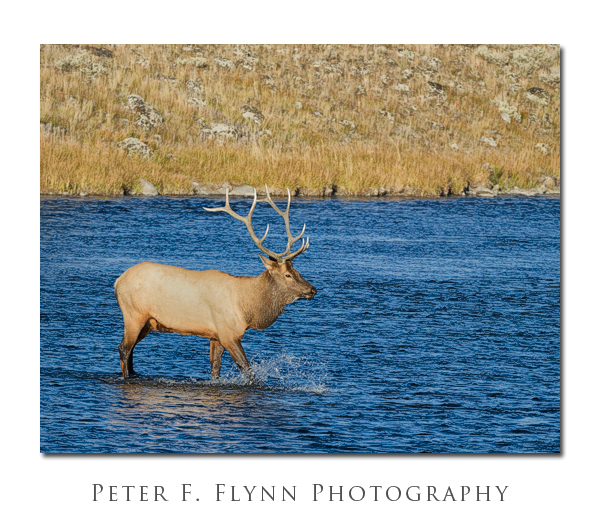
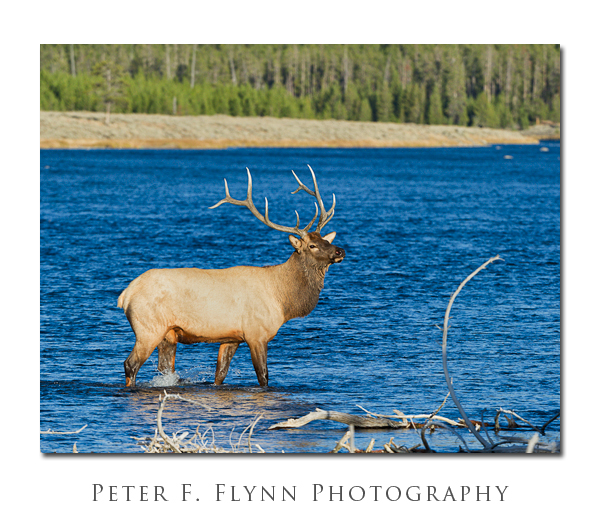
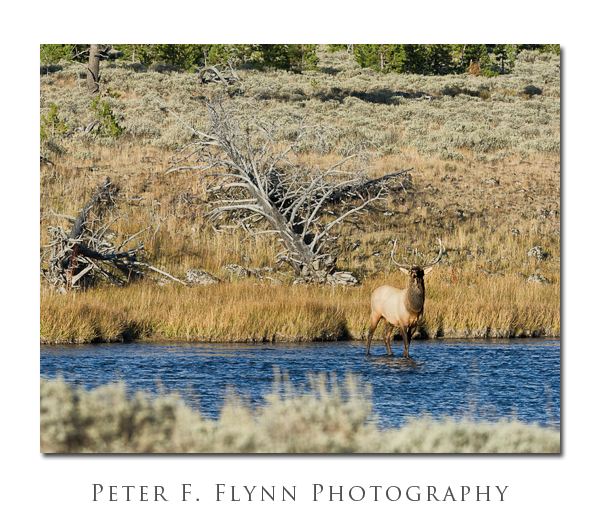
In our experience, the most effective way to observe wildlife in Yellowstone NP is to keep moving.  Others may have equally good strategies, but this traveling thing seems to work pretty well.  On a late afternoon excursion to the West Entrance, we happened upon this magnificent bull Elk strolling across the Madison River at a point somewhere between the most western of the picnic areas and the West Entrance gate.
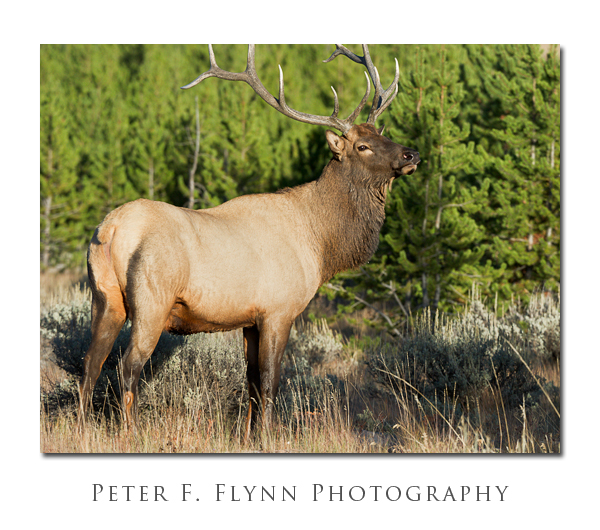
By the time the Elk had crossed the Madison River, there were dozens of cars lining the roadway watching.  For its part, the big bull maintained his dignity and level best to ignore the imposing Human.  The final images, above and below, show the spirit of this awesome creature, proud and strong in the failing autumn light.
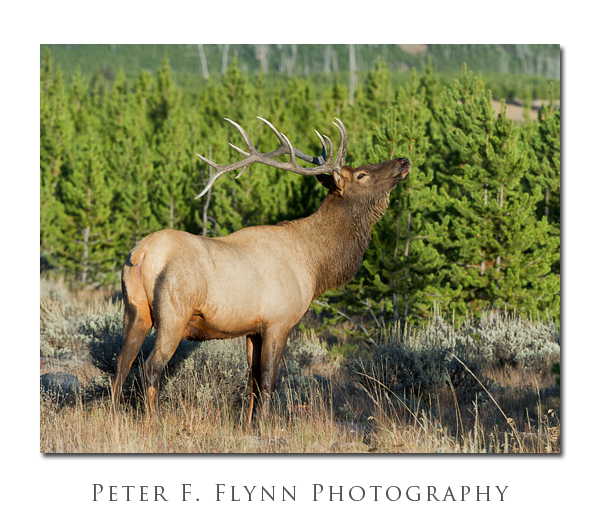
Images in this entry were recorded on September 20, 2010, at around 18:30 MDT, using the Nikon D3s and the AF-S VR Zoom-NIKKOR 200-400mm f/4G IF-ED lens at 400mm.  Exposures were all at f/8 with shutter speeds around 1/1600s (+0.33 EV), ISO at 1250.

Images were processed using a combination of Photoshop and 2nd-Vendor utilities, including Photokit Sharpener, and the Nik Suite.  Viveza 2 was used to adjust brightness/contrast/local-contrast.  Color Efex Pro 3 was used to employ adjustable vignetting to emphasize the central subject.

Copyright 2011 Peter F. Flynn. No usage permitted without prior written consent. All rights reserved.
 

Napping Grizzly

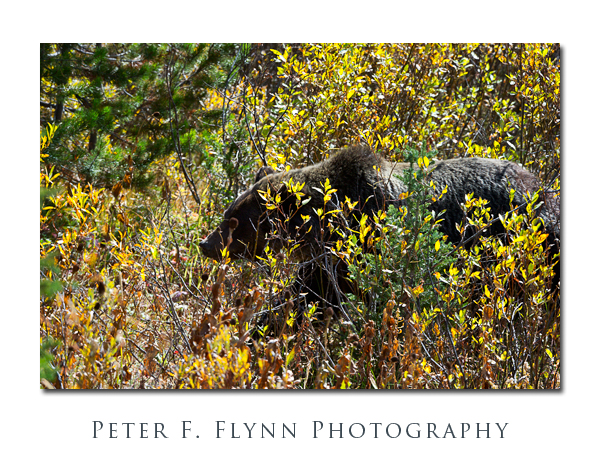
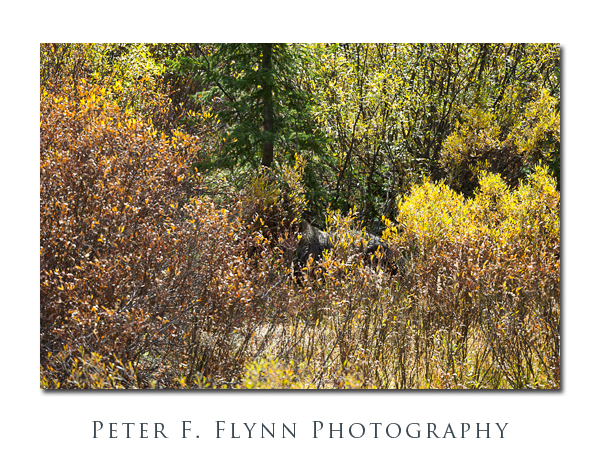
On a run down to Grand Teton from Yellowstone we encountered a small group of folks peering off to the side of the roadway.  This, of course, is the signature of some sort of potential wildlife encounter.  Often as not, it is a Mule Deer, but this time – score – a napping Grizzly Bear.  Here’s the thing, Ursus arctos horribilis does not usually snug in for too long, and soon enough, the big bear is off in search of its next meal.

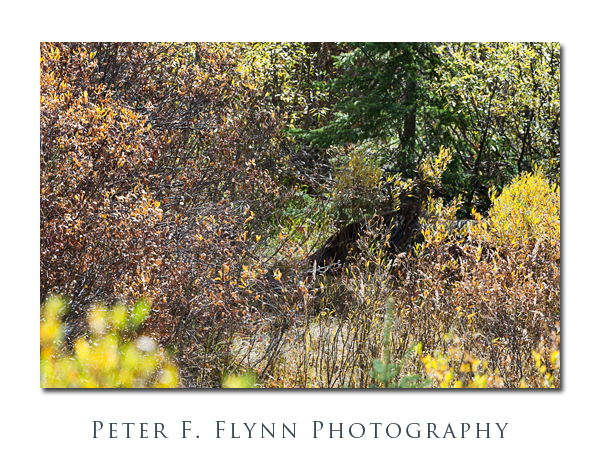
Is there really a bear in those bushes though?

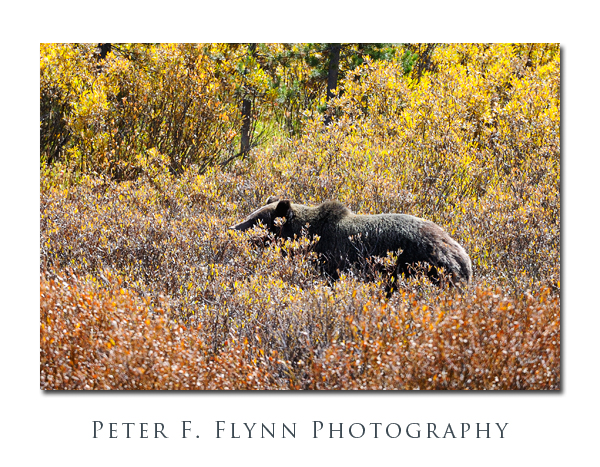
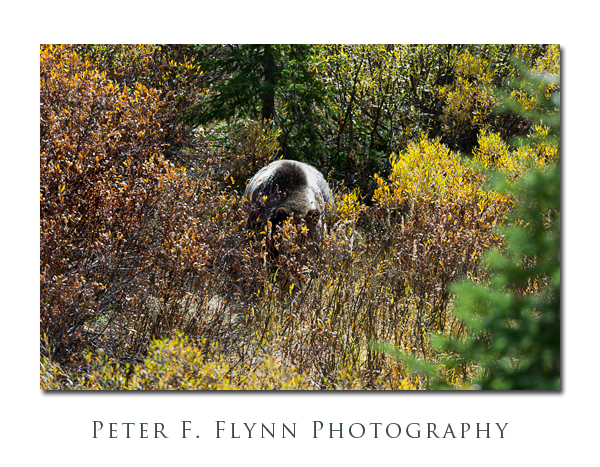
Yes, we’d recognize those ears, that shoulder hump, and that silver back anywhere.  Like I said, it *was* a napping Griz.  Now that its awake, Griz moves out with a purpose.

So how close is that bear anyway?  Let me just see…FX format, 400mm, and wow, that Bear pretty much fills the frame.  Dang close.  Now before anyone gets judgmental, I *did* look around and confirm that I was much quicker than most of the people nearby.  Anyway, by now the Park Service docent is freaking out, yelling for everyone to get back into their cars.  Good idea actually, at least for the plebs, but instead I dash up the road, well ahead of the bear.  I’ve used this strategy to pretty good purpose from time to time (but kids, DO NOT emulate this behavior).

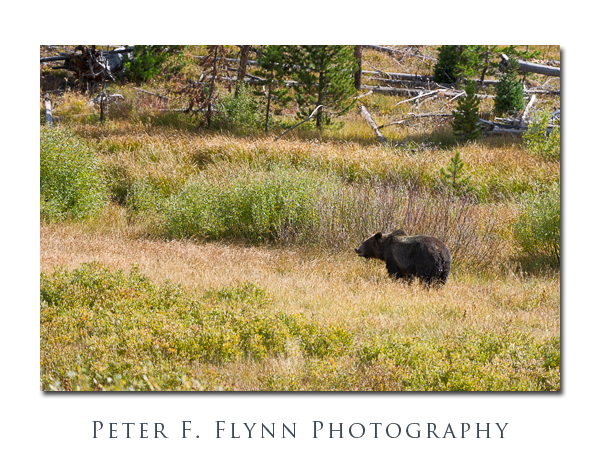
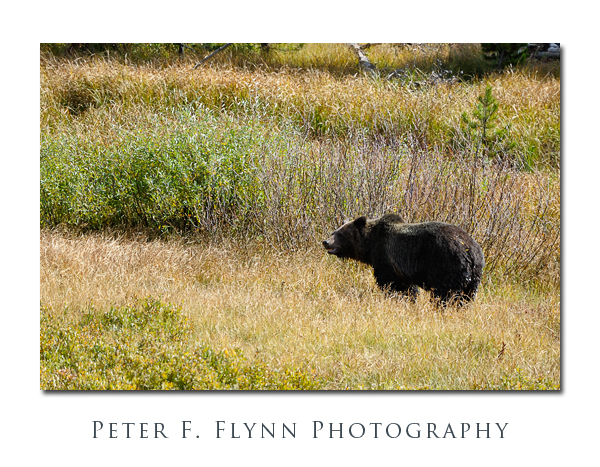
Griz finally emerges from the underbrush and into a meadow.  A most excellent specimen of the species.

Images in this entry were recorded in the John D. Rockefeller, Jr. Memorial Parkway at around noon of September 23, 2010, using the Nikon D3s and the AF-S VR Zoom-NIKKOR 200-400mm f/4G IF-ED lens at 400mm.  Exposures were all at f/8 with shutter speeds around 1/800s (+0.33 EV), ISO at 1000.

Copyright 2011 Peter F. Flynn. No usage permitted without prior written consent. All rights reserved.


Cathedral Park, PDX

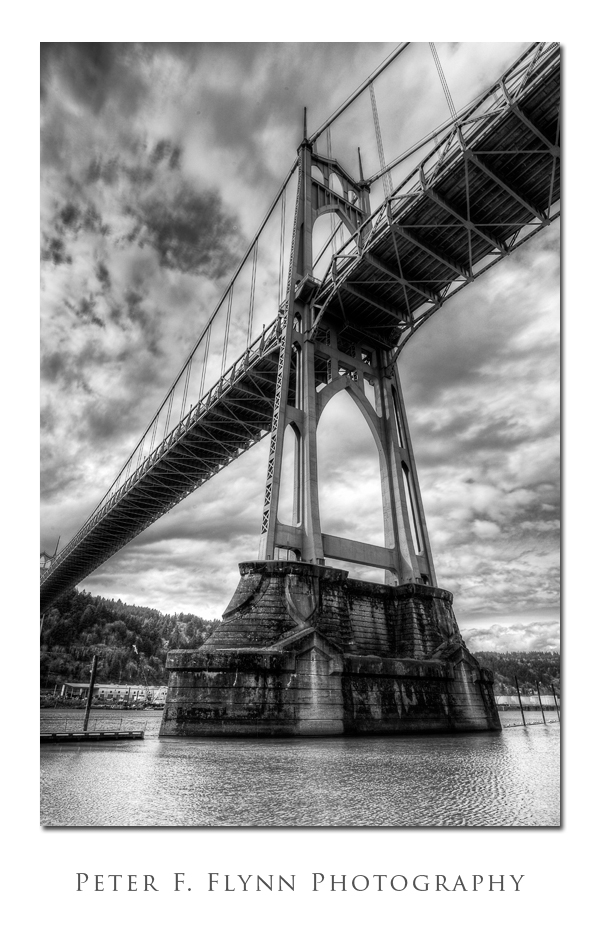
The northern gateway of Portland, OR is marked by a most beautiful structure named the St. Johns Bridge.  The steel suspension bridge spans the Willamette River between the Portlandian neighborhood of St. Johns on the east side and the industrial district the dominates the waterfront area near the Linnton neighborhood on the west side.  The bridge, completed in 1931, was designed according to a Gothic Cathedral-like theme, with a pair of large spire-topped towers, distinctively arched supports, and a high, long arching center span (1,200 ft).

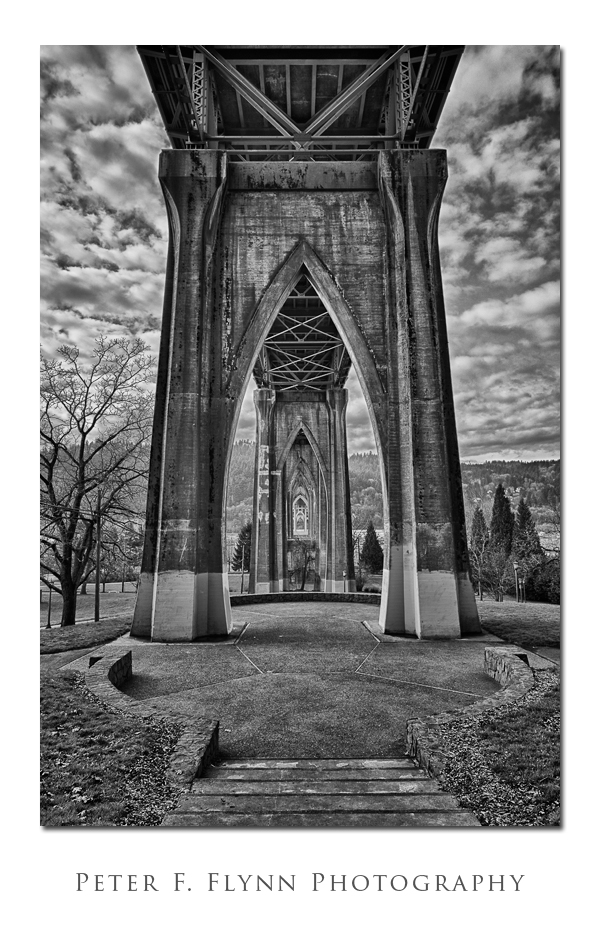
Cathedral Park is located under the east end of the Bridge, and provides excellent views of the bridge supports all the way to the eastern main tower.  Not a large park, but a unique one.

Shooting the arches and the underside of the bridge presents all sort of challenges, chief among them being the high dynamic range scene generated by the (always) strongly backlit subject.  As the rival smartphone vendors seem to claim constantly these days…we have an app for that…  Actually, we have two new apps for this, which are HDR Efex Pro by Nik Software and the new version of Photomatix Pro (4.0), by HDRsoft.  I’ll have  a few comments on these software packages in the next few entries.

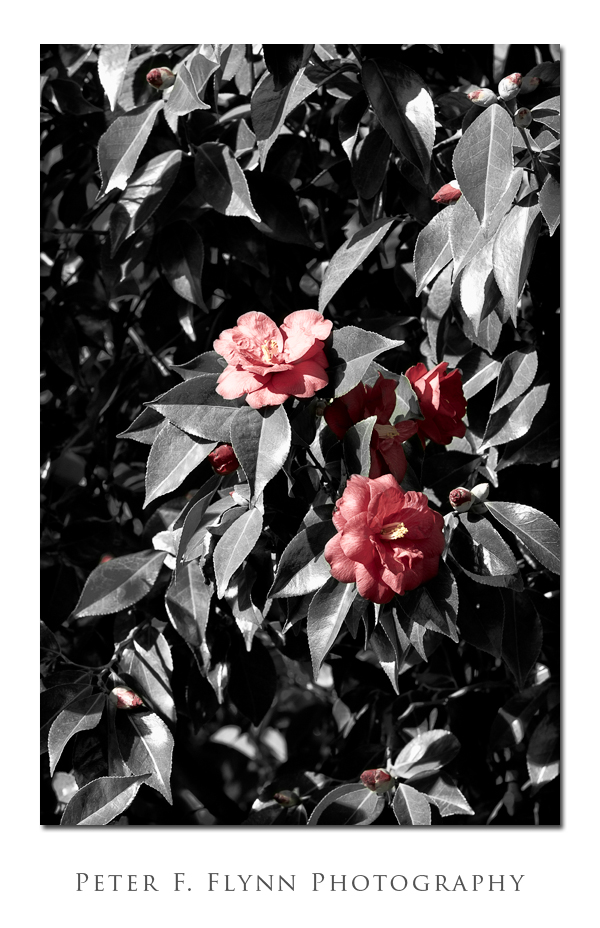
Images in this entry were recorded using the Nikon D3s, and the AF-S NIKKOR 16-35mm f/4G ED VR, the AF-S NIKKOR 24-70mm f/2.8G ED, and the AF-S NIKKOR 70-200mm f/2.8G ED VR II lens.  Bracketing for the HDR images of the bridge pillar and the support arches consisted of 5 shots at +2 EV, +1EV, 0 EV, -1 EV, and -2 EV.  These two HDR images were converted to BW using Nik Silver Efex  Pro 2.  The image of the Camellia Bush  is not HDR, but is a single color image, converted to BW using Nik Silver Efex Pro, masked to let some of the color of the flowers show through.

Copyright 2011 Peter F. Flynn. No usage permitted without prior written consent. All rights reserved.